
Turkish Rugs
Anatolian weaving, typically using the symmetric Turkish knot, which produces bolder, more geometric drawing than its Persian counterpart.
How to tell
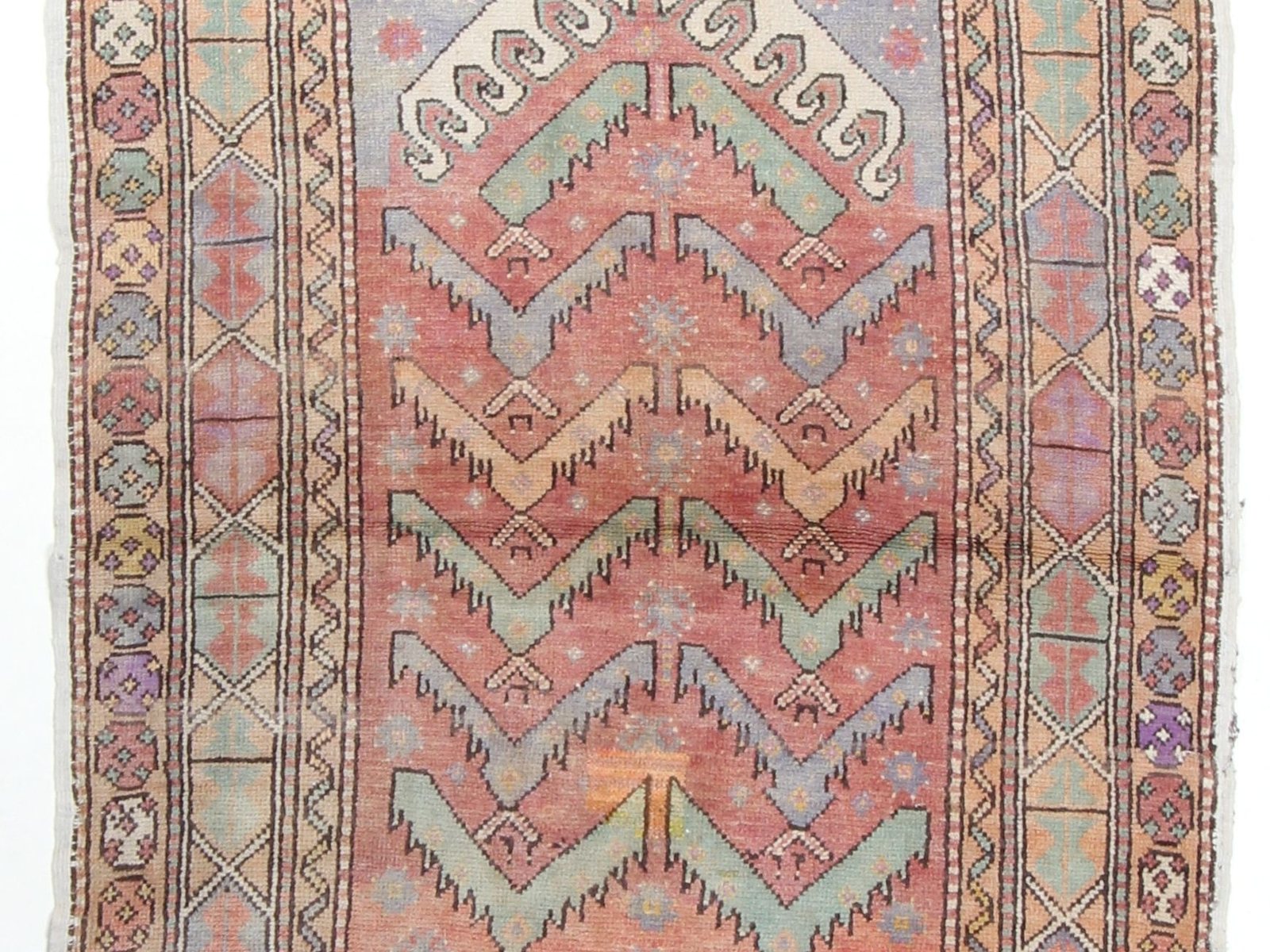
Look for symmetry and straight lines — stepped medallions, strong borders, and motifs that resolve into geometry rather than flowing vine work. Prayer rugs with a directional niche are a recognisable Anatolian form.
How we clean turkish rugs
Turkish wool is often springier and higher in lanolin than Persian, which helps it shed soil but also means detergent has to be chosen so the natural oils are not stripped. Over-washed Turkish wool goes dry and brittle, and that is not reversible.
What goes wrong
Selvedge loss down the long edges, where the wrapping that binds the sides wears through and the foundation begins to unravel. Caught early it is a simple rebind; left alone the rug loses width permanently.